
What is RAM speed?
RAM speed is how quickly your memory can transfer data to and from the processor, measured in megatransfers per second (MT/s) and often labelled in MHz. A stick rated at DDR4-3200 moves data 3,200 million times per second. Higher numbers mean the CPU spends less time waiting for data, which matters most in memory-heavy work: large spreadsheets, video editing, virtual machines, compiling, and running AI models locally.
Two numbers describe memory, and they are easy to confuse:
- Capacity — how much you have, in gigabytes. This decides whether something fits in memory.
- Speed — how fast it moves, in MT/s. This decides how quickly it can be read once it fits.
Speed combined with the memory bus width gives you bandwidth, usually quoted in GB/s. Bandwidth is the figure that actually predicts performance in memory-bound work, and it is why two machines with the same 32GB of RAM can behave very differently.
Typical ranges as a rough guide: DDR4 usually runs between 2133 and 3600 MT/s, and DDR5 commonly starts around 4800 MT/s and climbs from there. Apple Silicon uses unified memory shared between CPU and GPU, which is why its bandwidth figures are quoted directly in GB/s rather than MT/s.
The rest of this guide shows you exactly how to check the speed your system is actually running at — which is often lower than the speed printed on the packaging, because memory does not always run at its rated profile by default.
Why RAM speed matters for running AI models locally
If you are looking up RAM speed because you want to run AI models on your own machine, this is the number that matters most — more than the processor, in many cases.
When a local large language model generates text, it has to read its weights out of memory for every single token it produces. That makes generation memory-bandwidth-bound: the speed of your memory, not the raw power of your chip, sets the ceiling. A useful approximation is:
tokens per second ≈ memory bandwidth (GB/s) × 0.65 ÷ active model weights (GB)
So a machine with 120 GB/s of bandwidth running an 8B model at 4-bit (roughly 5GB of weights) lands somewhere around 15 tokens per second, while a graphics card with 900+ GB/s of dedicated memory bandwidth running the same model is roughly eight times quicker. Capacity decides which models will load at all; bandwidth decides whether they are pleasant to use.
If that is what brought you here, these will get you to an answer faster than checking your RAM speed by hand:
- Local AI hardware matrix — memory bandwidth and estimated tokens/sec for 75 laptops, desktops and GPUs
- VRAM calculator — how much memory a given model and context length actually needs
- How much RAM and VRAM do you need to run local LLMs? — the full explanation, tier by tier
How to check RAM speed
This tutorial gives you a brief idea on how to check RAM speed on your PCs or Macbooks. Besides, the RAM or Random Access Memory carries paramount importance in the computer system. Also, it is one such memory which enables the computer or laptop to perform various functions. The most significant of those is the successful running of software.
Moreover, the RAM is responsible for the proper loading and running of these applications on your device. It also holds the data of these softwares. Besides, it also enables the proper functioning of the system kernel. Now, your device’s RAM must run at a proper speed so that it functions smoothly. Hence, it is necessary that you keep a check on the RAM’s speed. Let us follow some basic steps for checking the RAM speed on both Windows and Mac platforms.
Also, read about Complete Guide: How to Set up Voicemail on iPhone
How to Check RAM Speed

a) For Windows
Method 1: Use third-party software like CPU-Z
If you are uncomfortable with using Command prompt for checking the RAM speed, you can opt for this method. Follow the below-mentioned steps.
1) Install CPU-Z on your PC
You can google for CPU-Z and on the top result, you will find their website. Go through your system requirements and find the version that is best suitable for your device.
2) Run the software
After successful installation, run this software. You will find that it scans your device for a thorough analysis. Wait till this process gets accomplished.
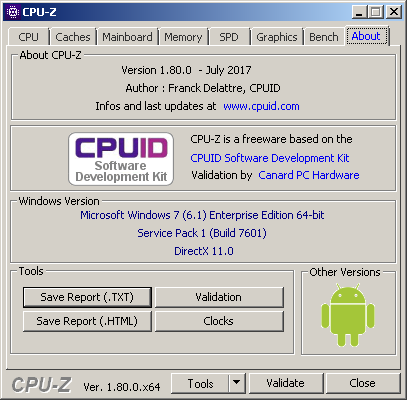
3) Click on the Memory Tab and watch out for DRAM Frequency
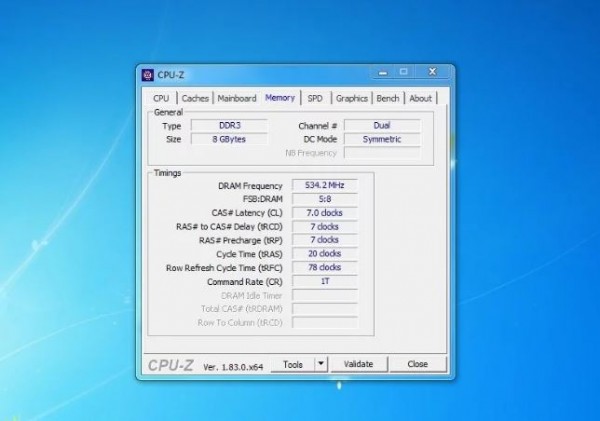
After the analysis, a menu will appear as above. Click on the Memory tab and find out the DRAM Frequency column right at the top. It will display your RAM speed in frequency (MHz). However, if your PC runs at a double data rate, you have to double the frequency for the actual RAM speed.
Method 2: Using Command Prompt
This is a slightly tough method for new users. However, our user-friendly guide makes it relatively easier for you.
1) Open Command Prompt on your device
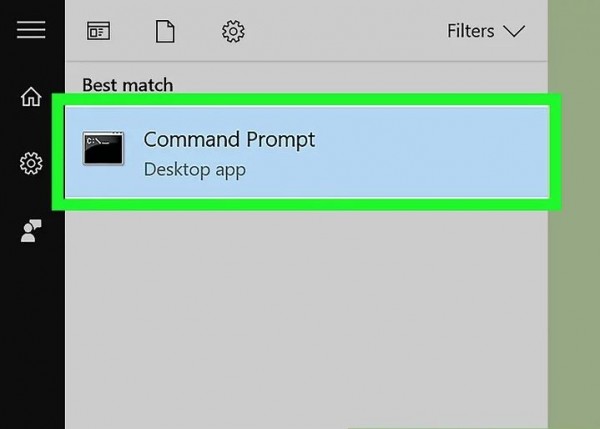
Search for the Command Prompt software on your device. Open the Start menu and click on the Command Prompt software as shown above.
2) Type the command required
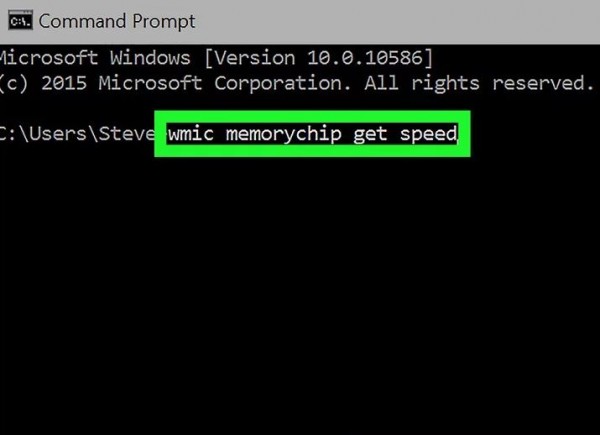
After opening the software, you need to type the command: wmic memorychip get speed. This is the command which is required in order to find the RAM speed.
3) Press enter
After entering this command, press the enter key from your keyboard, be it physical or virtual.
4) Watch out for the chip speeds

After pressing enter, the Command Prompt will show the RAM speeds of every chip on your device. There you go!
Recommended read for you: Best Microphone Apps for your Phone.
b) For Mac
For Macintosh systems, the process is relatively simpler than that for Windows. Follow these steps to check RAM speed on your Mac devices.
1) Open the Utilities file on your device
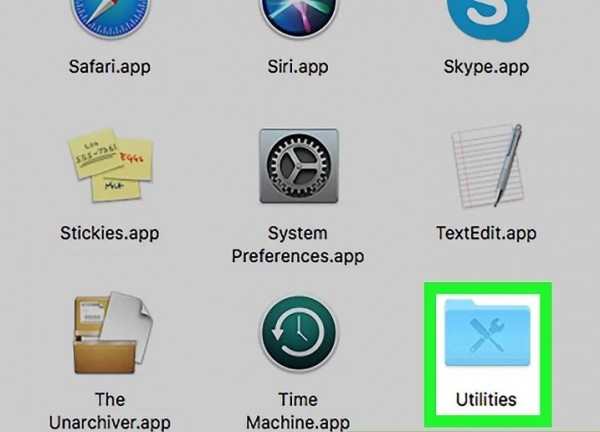
On your Mac device, look out for the Utilities file. You can find this in the Applications parent folder. Click on the file.
2) Click on the System Information App
Afterwards, check out the System Information.app file in the Utilities file and click on it to open.
3) Click on the Memory Tab
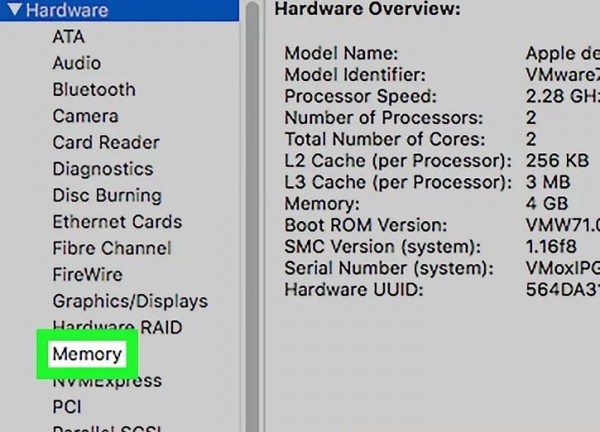
Afterward, there will be a menu on the left side as above. Click on the Memory tab. This tab stores all the data regarding each chip your Mac device possesses.
4) Check the Memory Slots table
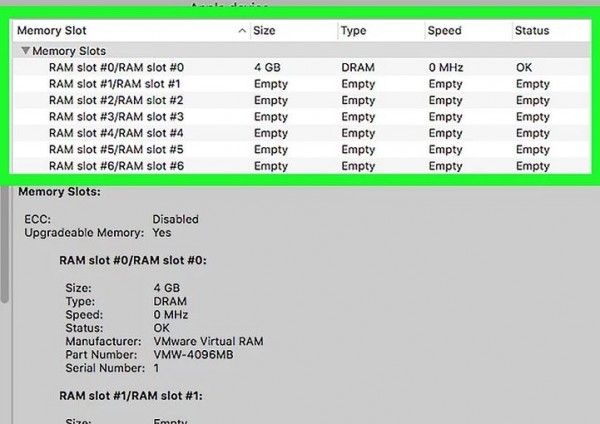
As soon as you click on the Memory tab, a similar tab will appear on your screen. You can check your devices’ RAM speed in the frequency range of MHz. You are ready to roll!
Work out what your hardware can actually run
Free calculators and directories, sized from real model weights — before you download gigabytes or order a card: